
10 Exercises To Heal Back And Neck Pain EXERCISES

By Sarah Barkley Published on March 22, 2023 Last modified March 18, 2023 Neck and back pain can happen to anyone, and it often occurs at the most inopportune time. When it happens to you, you can do exercises to help alleviate the pain and find comfort. You might wake up with back or neck pain, or it might set in toward the end of your day. Sometimes it’ll seem like it never goes away, making it hard to pinpoint the cause. When you experience back and neck pain, stretching and strengthening exercises can make a difference. Consider doing dynamic stretches before your exercises and static stretches afterward. It’ll help ease the pain and prevent injury.
Six Frequent Causes of Neck and Back Pain
Your neck and spine contain bony vertebrae with flexible cartilage discs in between that work as shock absorbers. You also have nerves inside your spinal cord and various ligaments and muscles that support your neck and head. When any of these areas gets injured, it can cause pain. Acute neck pain often heals on its own and goes away within a couple of weeks, but some conditions require treatment. The average adult head weighs between 10 and 12 pounds when it’s in an upright position. However, looking down at a device (like your phone) can increase the load your head places on your neck by 60 pounds. It’s often called “text neck” since many feel pressure from looking down at their phones.

Some common causes of back and neck pain include:
-
muscle strain from poor posture, overuse, or awkward sleep positions
-
injury from sports, falls, or accidents
-
wear and tear from aging
-
herniated disc
-
osteoporosis causing weak or brittle bones
-
arthritis
Stretching and doing strengthening exercises to ease pain can be uncomfortable, but it shouldn’t cause more pain. If it does, stop immediately and consult a healthcare professional. They can suggest other exercises you can try, or they’ll help diagnose the cause of your pain.
Warming Up with Dynamic Stretching Exercises
Dynamic stretches help prepare your muscles, ligaments, and joints for performing exercises. Choose a couple of these before exercising and do each for 30 seconds to one minute.
Neck Roll
The neck roll stretches your neck and upper back. Here’s how to do it:
-
Face forward and tilt your neck to the right until you feel the muscle pull.
-
Hold it for a couple of seconds and roll your head counterclockwise.
-
Once you reach your left shoulder, hold the position for a couple more seconds.
-
Continue the counterclockwise rotation until you’re back to the starting position.
-
Repeat the stretch but roll your head clockwise this time.
-
Do it two to three times.
Shoulder Roll
The shoulder roll is good for stretching your upper back and shoulders. Here’s how to do it:
Stand up straight and let your arms relax at your sides.
Lift your shoulders toward your ears and squeeze your shoulder blades together.
In a circular motion, roll your shoulders backward.
Complete five rotations backward.
Roll your shoulders forward in a circular motion another five times.
Repeat each direction until your shoulders, back, and neck loosen.
Overhead Arm Reach
The overhead arm reach helps stretch your shoulders and upper back, preparing your body for exercises. Here’s how to do it:
-
Sit down, face forward, and put your feet flat on the floor.
-
Lift your right arm above your head.
-
Reach to the left while bending your torso until you feel the pull of the stretch.
-
Return to the original position and repeat the movement five times.
-
Switch to your left arm and do the same thing another five times.
Note: After you master this gentle stretch, you can turn it into a full body stretch, like in this video:
Chair Rotation
The chair rotation stretch can help loosen up your upper, mid, and lower back. Here’s how to do it:
-
Sit sideways with your right side resting against the back of the chair.
-
Without moving your legs, rotate your torso to the right as you reach for the back of the chair, pushing further until your muscles loosen.
-
Hold the position for ten seconds, and repeat on each side three time.
Exercises to Heal Back and Neck Pain
Exercises for back and neck pain can help strengthen the muscles and reduce and prevent pain. Some require simple equipment, but you don’t need anything for others. Choose a couple to start with to see what you like best, switching it up sometimes to try them all.
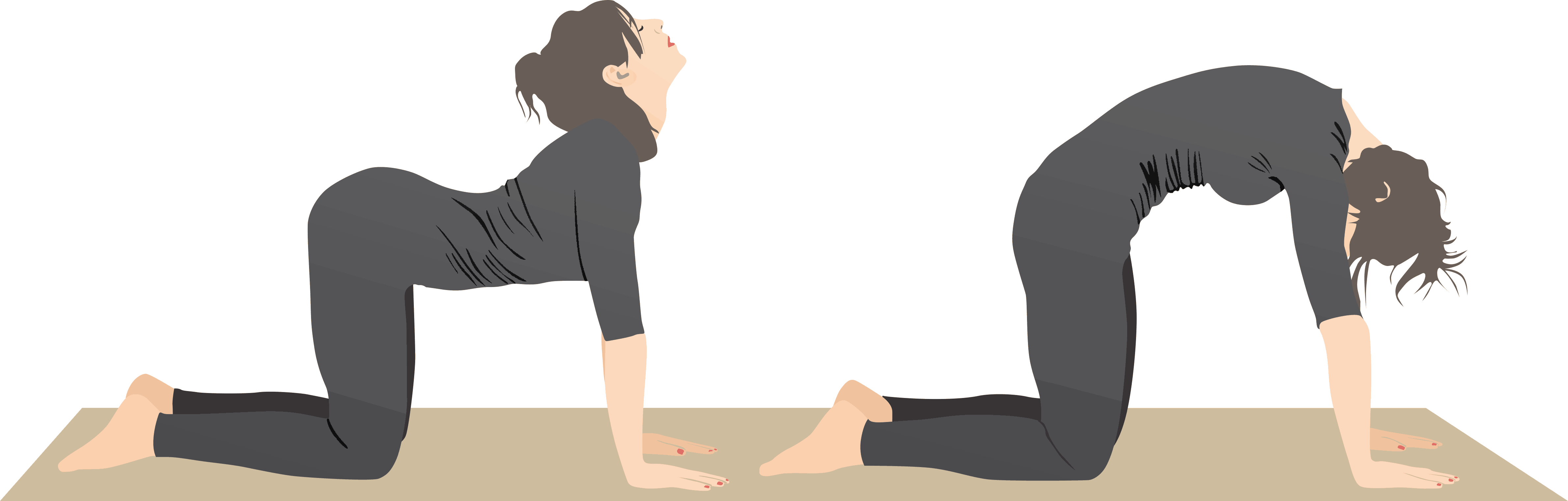
1 – Cat-Cow Yoga Pose
This exercise can help heal the pain in your back and neck. Here’s how to do it:
-
Get on all fours with your palms beneath your shoulders and knees under your hips.
-
Inhale and tuck your pelvis as you round your back, pulling your navel toward your spine.
-
Lower your head until your neck relaxes.
-
Hold the position for three to five seconds before exhaling and returning to the original.
-
Look up toward the ceiling (or sky), letting your back sink to the floor.
-
Hold that position for another three to five seconds before returning to the start position.
-
Repeat the process five times.
2 – Reverse Dumbbell Fly
The reverse dumbbell fly requires two lightweight dumbbells. It helps strengthen your upper back and shoulders while healing and preventing pain. Here’s how you do it:
-
Hold two dumbbells with your arms hanging straight down.
-
Hinge your waist at a 45-degree angle.
-
Without moving your neck, raise your arms out and up.
-
When you can’t lift any higher, squeeze your shoulders together.
-
Do this for three sets of eight to twelve reps.
3 – Rowing Exercises (2 variations)
A row can help reduce pain in your upper back. It requires a resistance band or dumbbell. Here’s how to do it:
Using a Resistance Band
-
Attach the resistance band to a stable surface or pole before grabbing each handle and extending your arms.
-
Bend your elbows and keep them close to your body as you pull the handles straight back.
-
Do this for two to three sets of eight to 12 reps.
Using a Dumbbell
Hold the dumbbell in your right hand and extend your left arm to brace yourself on a wall or other sturdy surface.
-
With the dumbbell hanging down, hinge your waist 45 degrees.
-
Keep your neck in place and pull the dumbbell straight up, bending your elbow.
-
Repeat for two or three sets of eight or 12 reps.
4 – Neck Flexion and Extension (Forward and Backward Exercises)
This exercise is simple and can help heal neck pain. One of the best parts is that you can do it anywhere you are. Here’s how to do it:
-
Flex your chin toward your chest until you feel stretching in the back of your neck.
-
Hold it for five to 10 seconds before returning to the original position.
-
Extend your head backward, raising your chin toward the ceiling until you feel stretching in the front of your neck.
-
Hold this position for another five to 10 seconds before returning to the original.
-
Repeat each direction two to four times.
5 – Knee to Chest
This exercise is good for your lower back. Here’s how to do these exercises:
-
Lie on the floor, face up.
-
Bend your left knee and pull your leg up to your chest.
-
Hold it for five seconds before releasing it and alternating legs.
-
Alternate until you’ve done it three times each.
6 – Lat Pull down
The lat pull down can strengthen and alleviate pain in your upper back and shoulders. Here’s how to do it:
-
Place a resistance band on a stable surface with space beneath for sitting, kneeling, or standing.
-
Reach up with both arms and pull the resistance band down until your arms are parallel to the floor.
-
Hold it for at least three seconds before releasing the resistance
-
Do three sets of lat pulldowns, with eight to twelve reps in each.
7 – Face Pull Exercises
The face pull exercise is good for your upper back and requires a resistance band. Here’s how to do it:
-
Secure a resistance band to a stable surface higher than eye level.
-
Using an overhand grip, grab each handle and pull toward your face.
-
As you pull the resistance band, flare your upper arms out and squeeze your shoulders together.
-
After holding for a few seconds, repeat the exercise for three sets of twelve reps
8 – Superman
These exercises can help alleviate pain in your mid to lower back. Here’s how to do it:
-
Lie on your stomach and extend your arms straight out above your head.
-
Raise your legs and arms simultaneously without moving your neck.
-
Focus on using your back muscles and glutes while lifting.
-
Hold it for a few seconds, return to the starting position, and repeat for three sets of ten reps.

9 – Lateral Neck Flexion (Side-to-Side Bends)
This exercise can help ease pain in your back and neck while strengthening your
muscles. Here’s how to do it:
-
Bring your ear toward your shoulder, and bend your head to the right.
-
When you feel the stretching in your neck, hold this position for five to 10 seconds.
-
Repeat the stretch on the opposite side.
-
Do these two to four times in each direction.
10 – Wall Angel Exercises
The wall angel strengthens your neck and upper back, helping heal and prevent pain. Here’s how you do it:
-
Stand against the wall with your back flat and your feet out slightly.
-
Place our arms out next to you, making a “T” shape against the wall.
-
Bend your elbows and move your arms 90 degrees until your hands are next to your head.
-
Move your arms as if you were making a snow angel, keeping your back and arms flat against the wall.
-
Repeat the wall angel exercise for three sets of 10 reps.
Post-Workout Static Stretches
Static stretches are best after a workout because you hold the position for a while. The prolonged static stretching can temporarily reduce your muscular strength, endurance, reaction time, and exercise performance. Doing it after your exercises can also help restore and maintain flexibility and range of motion.

Final Thoughts on Exercises to Heal Back and Neck Pain
Back and neck pain can be hard to live with, but many exercises can help alleviate the discomfort. Try a few each day, and switch them up until you try them all. Finding the ones that work best for you can motivate you to do them regularly, and you’ll feel good while doing them.
Talk to a healthcare provider if these exercises don’t help your pain. You should also contact your doctor if you experience pain after an injury or have other symptoms. Getting help will improve your life and well-being.
Translate This Page